Estimating from records counted in different ways
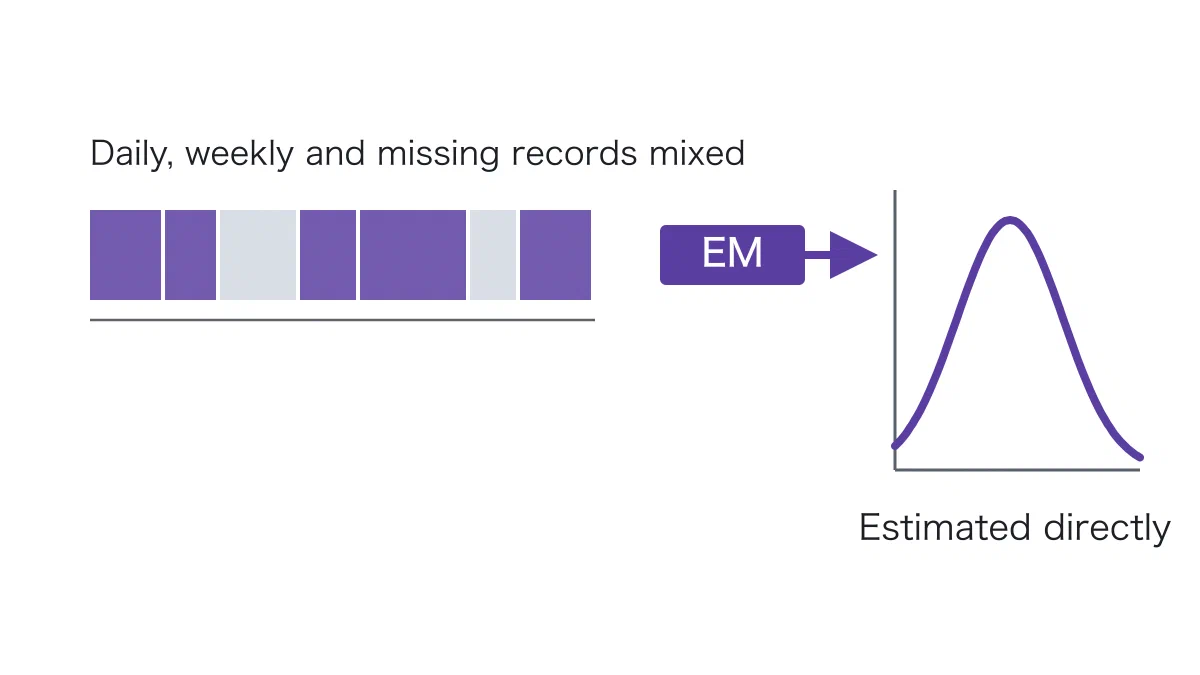
Estimating reliability requires a record of failures, but real records are never in ideal shape. One period was counted daily and another weekly; a stretch in the middle is missing altogether.
Records of this kind are called generalized failure count data, and this work gives an EM algorithm that estimates the parameters directly from them. Nothing has to be reshaped, and nothing has to be discarded.
The EM algorithm works by filling in the information that cannot be seen, estimating from it, and then refilling with the new estimate. It suits data with missing entries, and it is the same tool we have used consistently for estimating phase-type distributions and Markovian arrival processes.
Being able to use the data as it stands is what makes the theory usable in practice.
Source paper
Mathematics (2021)