Making use of the chance to repair while you are there
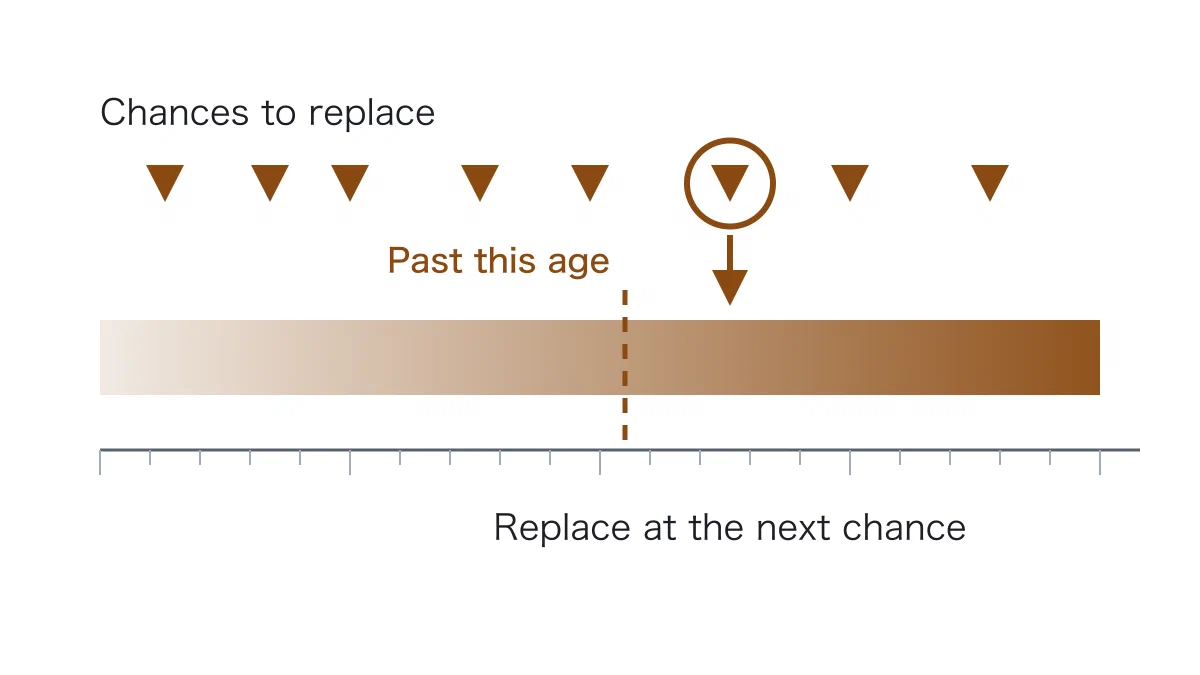
You cannot stop a machine to replace a part whenever you like. In practice the chances to replace arrive irregularly — when the line halts, or at a scheduled inspection.
Opportunity-based replacement policies address exactly this. Under the rule “once the part passes a certain age, replace it at the next chance”, the question is which age minimises cost.
This work treats time as discrete rather than continuous. Real maintenance is planned in days or in cycles, so discrete time is closer to practice — and the continuous-time results do not simply carry over, so the analysis has to be done afresh.
The paper establishes the conditions under which an optimal replacement age exists and gives an algorithm to find it. It has been widely cited since publication.
Source paper
Optimal opportunity-based age replacement policies in discrete time
Reliability Engineering and System Safety (2024)