Optimal maintenance and replacement
When should a unit be replaced, repaired or inspected? The theory of optimal preventive maintenance built on stochastic processes.
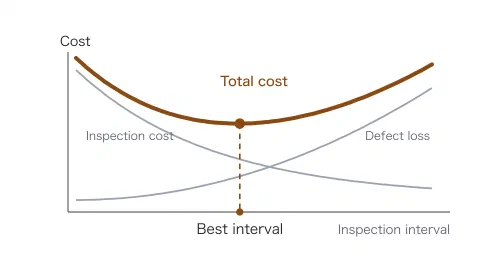
We study mathematical techniques for evaluating the reliability and availability of maintained systems — those involving replacement and repair — and of standby redundant systems. Working from stochastic processes, Markov renewal processes in particular, we analyse how a system behaves probabilistically and then derive optimal preventive maintenance schedules for replacement, repair and inspection under a range of reliability measures and cost criteria.
Lifetime distributions are often unknown, and statistical information is often incomplete. For those cases we develop non-parametric estimators of the optimal schedule based on total time on test and Lorenz statistics. For the repair limit replacement problem, a class of corrective maintenance models, we have proposed a unified solution method; our aim is to apply statistical decision theory to a broader class of maintenance models.
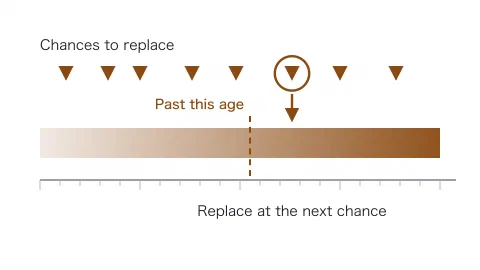
Recent work addresses problems that have long been recognised as important but left open because they are hard: opportunity-based age replacement in discrete time, lifetime analysis of repairable systems by wavelet methods, and a unified framework for failure-event-based component importance. The mathematics of maintenance is not confined to systems reliability engineering — it is the foundation on which reliability problems in any domain are solved.